



We received a question on our Facebook page asking fear and stress in dogs, and we think this is the perfect opportunity to talk about reading your dog and knowing your dog's stress signals.
Do you know what your dog is telling you? Dogs speak with their bodies, and they're constantly telling us things. How well are you listening?
When training your dog or even when you're out for a walk or hanging out in the backyard, it's important to pay attention to your dog's body language so you know whether your dog is relaxed and happy or stressed.
As humans, we're very familiar with stress; we experience it several times a day, between traffic, deadlines, work, relationships, etc. Dogs are no different, although their stressors are very different from ours. Service dogs typically experience more stress than pets because they are being asked to enter new environments and perform challenging, specialized tasks.
What is stress? It's anything that throws the body out of balance. Causes of stress include a sudden increase or decrease in exercise, changes in the environment, pain or illness and unfamiliar animals. There are several levels of stress, and dogs display different behaviors and body language for each level.
Level 1 Stress
When a dog experiences level 1 stress, which is a low level of stress, the dog may try to avoid the thing that is causing stress. The dog may also lick his nose or lips, sniff, scratch, yawn, play bow, shake or paw at things.
What should you do if you see your dog doing these stress signs? You can give your dog more treats so they associate good things with the stressor. You can put some distance between your dog and the stressor or even remove your dog to a quiet place. This will help the dog calm down and help the dog trust you because he will learn that you will take care of him and remove him from scary situations.
Level 2 Stress
When a dog's stress level goes up, he may start panting, drooling, or even vomiting. He may get dandruff and bloodshot eyes, and his muscles will be very tense. He could also become extremely active or restless, drink excessively and develop sweaty paws.
If you notice any of these stress signs in your dog, you should remove your dog from the situation. Give your dog a chance to relax. This may mean going outside to sniff for a while or maybe you give the dog a puppy massage. You will need to use your judgment about whether your dog will be able to handle going back into the stressful situation. It may be time to end your training session.
Training
Stressors can change, so situations that didn't bother a dog when they were 3 months old may suddenly cause them stress when they're 8 months old. However, with training, you can help your dog realize that they don't need to be worried or fearful in that situation.
For example, let's say that a dog is afraid of people holding umbrellas. Whenever they see someone with an umbrella, they start barking and lunging. However, with training, the dog can learn that people with umbrellas are not scary and the dog will be able to remain calm and even interact with people with umbrellas.
One way to train it
If a dog finds something very stressful, such as people with umbrellas, we sometimes use constructional aggression treatment (CAT). This type of training uses negative reinforcement, meaning a behavior is reinforced by the removal of the aversive or stressor.
If the dog is barking or lunging at something, most handlers will remove the dog from the situation, which means that the dog learns that by barking and jumping, they don't have to stay in the stressful situation. When we use CAT, we're teaching the dog that the scary thing will go away if they give an appropriate alternative behavior, such as looking at their handler.
We'll use the example of the person with an umbrella to explain the training. We start this training by having the dog in a fixed spot. The dog can have toys, water, etc. around it. However, it's very important that you don't use any food or the clicker during CAT training because we want the dog to generalize the behavior regardless of whether their handler is wearing the treat pouch.
Next, we have a person with an umbrella approach the dog to the point where the dog notices it. We don't want the person to get so close that the dog starts barking or lunging. As soon as the dog sees the person and tenses up, the person stops. This person with the umbrella will stay in that spot until the dog gives an appropriate alternative behaviors, such as looking away, blinking, making eye contact with their handler, etc. As soon as the dog does that, the person with the umbrella moves away again to the point where the dog isn't bothered at all by him.
Training continues in this manner with the person moving a little bit closer. The dog eventually learns that they can make the scary thing (in this example, the person with the umbrella) go away by being calm around it.
At some point the dog may switch to being interested in the person with the umbrella. For example, the dog may sniff the air when the person comes forward. In this case, the person would leave as soon as the dog sniffs the air.
Eventually, the dog will realize that people with umbrellas aren't anything to be afraid of, and they should be able to remain calm and relaxed whenever they see a person with an umbrella.
During this whole process, you will need to pay very close attention to your dog's body language. You will be looking for very small signals from your dog - a head movement, a blink, a deep breath, etc. It takes patience, but if you pay attention to your dog, he will soon be able to remain calm and relaxed in stressful situations.
Tuesday, August 9, 2011


Monday, August 8, 2011
What's the Difference Between Service Dogs and Therapy Dogs?
It's International Assistance Dogs Week, an entire week devoted to recognizing and celebrating assistance dogs and everything they do to change their partners' lives! The rest of the week, we're going to post stories of service dogs and training tips, but today, we want to make sure that everyone understand what a service dog is.
There are so many different types of assistance dogs that it can get confusing. Guide dogs, service dogs, hearing dogs, balance dogs, psychiatric service dogs, seizure response dogs, facility dogs, diabetic alert dogs - there are even dogs who have been trained to detect peanuts for people who have life-threatening peanut allergies! (Please note that this isn't a comprehensive list of the types of assistance dogs.) Each of these dogs is trained in specific tasks to assist their partners. Assistance Dogs International (ADI) defines some of these types of assistance dogs, if you're interested in more details.
Today, however, we would like to discuss the difference between service dogs and therapy dogs. People often mistake therapy dogs for service dogs and vice versa.
Service Dogs
What is a service dog?
According to the ADI website, a service dogs is "a dog that works for individuals with disabilities other than blindness or deafness. They are trained to perform a wide variety of tasks including but not limited to; pulling a wheelchair, bracing, retrieving, alerting to a medical crisis, and providing assistance in a medical crisis. "
Service dogs are covered under the Americans with Disabilities Act (ADA). They are working dogs, not pets, and each dog must be trained to perform specific tasks for their partner. Under the ADA, service dogs have public access, meaning they can accompany their partner anywhere that is open to the general public. This includes restaurants, movie theaters, grocery stores, and other businesses and nonprofits. Legally, access to public places cannot be denied unless the dog is out of control or not housebroken.
Read the ADA's revised requirements for service animals for more information about service dogs and the law.
Therapy Dogs
What is a therapy dog?
A therapy dog is a pet that has been trained to provide affection and comfort to people. Therapy dogs often visit hospitals, nursing homes and schools to interact with the children and adults there. However, therapy dogs are not mentioned in the ADA and do not have public access. They must be invited to enter a public place, and business owners are well within their rights to ask a therapy dog to leave.
Emotional support dogs are similar to therapy dogs. While it may comfort their owners to have the dog with them, emotional support dogs are also pets that are not covered by the ADA and do not have public access.
Other Important Information About Service Dogs
How can you tell if a dog is a service dog?
Service dogs often wear a special harness to show that they are service dogs. However, the ADA does not require service dogs to be identified by a harness. If you aren't sure if a dog is a service dog, by law you are allowed to ask two questions: 1.) is the dog a service dog required because of a disability, and 2.) what specific tasks has the dog been trained to do.
You may not ask the person what their disability is, ask them to have the dog demonstrate a task, or ask for documentation for the disability or service dog.
Can you pet a service dog?
Please do not pet, feed or otherwise distract service dogs. Remember that they are working and must concentrate on assisting their partner. If you distract a service dog, you could even endanger the dog's partner.
The Norwegian Association of the Blind did a great public service announcement about the importance of not distracting assistance dogs.
You may, however, ask the person if you may pet their dog. Many times, the person will say yes, although they may make sure that the dog stays focused on them. Please don't be offended if the dog ignores you while you're petting it. This is actually a good thing! It means that the dog is most likely still focused on its partner, which is exactly what it's supposed to do.
If you ask to pet a service dog and the dog's partner says no, please respect their decision.
Can you talk to someone with a service dog?
Of course! People who have service dogs or who are training service dogs are often more than happy to talk to you. But please talk to the person and not the dog. After all, the person is the one who is going to answer you!
There are so many different types of assistance dogs that it can get confusing. Guide dogs, service dogs, hearing dogs, balance dogs, psychiatric service dogs, seizure response dogs, facility dogs, diabetic alert dogs - there are even dogs who have been trained to detect peanuts for people who have life-threatening peanut allergies! (Please note that this isn't a comprehensive list of the types of assistance dogs.) Each of these dogs is trained in specific tasks to assist their partners. Assistance Dogs International (ADI) defines some of these types of assistance dogs, if you're interested in more details.
Today, however, we would like to discuss the difference between service dogs and therapy dogs. People often mistake therapy dogs for service dogs and vice versa.
Service Dogs
What is a service dog?
According to the ADI website, a service dogs is "a dog that works for individuals with disabilities other than blindness or deafness. They are trained to perform a wide variety of tasks including but not limited to; pulling a wheelchair, bracing, retrieving, alerting to a medical crisis, and providing assistance in a medical crisis. "
Service dogs are covered under the Americans with Disabilities Act (ADA). They are working dogs, not pets, and each dog must be trained to perform specific tasks for their partner. Under the ADA, service dogs have public access, meaning they can accompany their partner anywhere that is open to the general public. This includes restaurants, movie theaters, grocery stores, and other businesses and nonprofits. Legally, access to public places cannot be denied unless the dog is out of control or not housebroken.
Read the ADA's revised requirements for service animals for more information about service dogs and the law.
Therapy Dogs
What is a therapy dog?
A therapy dog is a pet that has been trained to provide affection and comfort to people. Therapy dogs often visit hospitals, nursing homes and schools to interact with the children and adults there. However, therapy dogs are not mentioned in the ADA and do not have public access. They must be invited to enter a public place, and business owners are well within their rights to ask a therapy dog to leave.
Emotional support dogs are similar to therapy dogs. While it may comfort their owners to have the dog with them, emotional support dogs are also pets that are not covered by the ADA and do not have public access.
Other Important Information About Service Dogs
How can you tell if a dog is a service dog?
Service dogs often wear a special harness to show that they are service dogs. However, the ADA does not require service dogs to be identified by a harness. If you aren't sure if a dog is a service dog, by law you are allowed to ask two questions: 1.) is the dog a service dog required because of a disability, and 2.) what specific tasks has the dog been trained to do.
You may not ask the person what their disability is, ask them to have the dog demonstrate a task, or ask for documentation for the disability or service dog.
Can you pet a service dog?
Please do not pet, feed or otherwise distract service dogs. Remember that they are working and must concentrate on assisting their partner. If you distract a service dog, you could even endanger the dog's partner.
The Norwegian Association of the Blind did a great public service announcement about the importance of not distracting assistance dogs.
You may, however, ask the person if you may pet their dog. Many times, the person will say yes, although they may make sure that the dog stays focused on them. Please don't be offended if the dog ignores you while you're petting it. This is actually a good thing! It means that the dog is most likely still focused on its partner, which is exactly what it's supposed to do.
If you ask to pet a service dog and the dog's partner says no, please respect their decision.
Can you talk to someone with a service dog?
Of course! People who have service dogs or who are training service dogs are often more than happy to talk to you. But please talk to the person and not the dog. After all, the person is the one who is going to answer you!
Thursday, August 4, 2011
International Assistance Dogs Week
 Next week is International Assistance Dogs Week! All next week, we will be celebrating with a series of posts about service dogs, training tips, and photos of working dogs.
If you have questions about service dogs, public access or anything else related to service dogs, just leave them in the comments. We'll do our best to answer them. Your question may even provide the inspiration for a blog post!
Check back on Monday for a discussion about the difference between service dogs and therapy dogs!
Don't forget to check out our Facebook page. We'll post additional training tips and photos. If you have a service dog or are training a service dog, we would love it if you posted a photo or shared your story with us on our Facebook page!
Monday, July 25, 2011
Canine Pool Party
 Saturday was the perfect day for a swim, and that's exactly what some of our puppy raisers did with their dogs! We went to Sun Hill Kennels, where they have an outdoor pool just for dogs, as well as half an acre of fenced-in land for the dogs to run.
Sun Hill Kennels donated two hours of pool time to SSD so our dogs could enjoy the pool. And they certainly loved it! They wore themselves out jumping into the water after tennis balls and other toys, and when they needed a break from swimming, they chased each other around the yard. It was a great afternoon!
Sun Hill Kennels is open to the public, but they ask that you call ahead to make an appointment first. The pool is a popular spot in the summer, and they take care to make sure that it doesn't get overcrowded.


Friday, July 22, 2011
How to Keep Your Dog Safe in the Heat

The Harrisburg area is under an excessive heat warning, and temperatures are breaking 100 degrees. Most people try to stay inside as much as possible, but if you have a dog, you know that you'll have to brave the heat at least two to three times a day. Here at SSD, we're in our last day of summer camp, and although we're trying to keep the campers and dogs in the air conditioning as much as possible, sometimes we just have to be outside.
Here are some tips for keeping your dog safe in the heat:
Give your dog lots of water. When you go outside, always make sure that your dog has access to cool, clean water. Your dog can quickly get dehydrated in this heat, and they'll need lots of water.
Avoid the hottest part of the day. Try not to be outside between 11 a.m. and 4 p.m. This is the hottest part of the day, and your dog's risk of heat-related illness or injury increases. Your dog may still need plenty of exercise, but try to take those walks in the early morning or in the evening. Also, take shorter walks and bring water with you so your dog doesn't get overheated. (And don't forget to take some water for yourself!)
Stay in the shade. When you take your dog outside or for a walk, look for a nice, shady route. Avoid walking on asphalt, which can get extremely hot and burn your dog's paws. Always test the street or sidewalk before starting on your walk. If it's too hot for you to walk in your bare feet, then it's too hot for your dog to walk on it in his bare paws. If you must walk on asphalt, consider getting booties for your dog to protect his paws.
Don't leave your dog in the car. We cannot say this enough. Don't leave your dog alone in a parked vehicle. The inside of the car can get hotter than an oven in a matter of minutes, and your dog could have a heat stroke and could even die. In the hot summer months, it's better to leave your dog at home than to bring them along as you run errands, no matter how short you think it will be.
Be careful while swimming. Swimming can be a great way to cool off in the heat. Many of our dogs in training love the water. Just make sure to always keep an eye on your dog while he's swimming, no matter how good of a swimmer he is. After swimming, rinse your dog with cool, clean water to get rid of the chlorine or salt. Dogs can get sick if they ingest these chemicals.
Try some frozen treats. There's nothing better than an ice cream cone on a hot summer day! Your dog may enjoy some frozen treats, too. While dogs can eat ice cream (except chocolate!), it can upset their stomachs. If you're going to give dogs ice cream or other frozen treats, don't overdo it. The simplest thing to do is to just give your dog some ice cubes. Many of our dogs in training love ice, and some even play with the ice cube before eating it!
Here are a few recipes we've found, if you'd like to make some frozen treats for your dog:
Frosty Paws Dog Ice Cream
Pumpkin Pops
Peanut Butter and Jelly Frozen Pops
While you're busy making sure your pet is safe in the heat, don't forget about yourself! Drink lots of water, take a refreshing dip in the pool, stick to the shade, or relax in the air conditioning during the hottest part of the day.
We hope you and your pets have a safe and fun summer!
Read more about pet safety in the heat.
Tuesday, July 12, 2011
Introducing SSD Hale
 The American Heroes puppies have joined their puppy raisers, and SSD Clara Hale traveled to the Northeast group! She's being raised by Nubble's puppy raiser, Donna.
Donna and Lindsey picked up Hale from the kennel last Friday. Although Hale cried the entire ride home, just like her brothers and sisters did for their puppy raisers, she settled in well enough at home to sleep through the night. She must have tired herself out because she only woke up once to to go outside and "get busy." In fact, she has been sleeping through the night every night and she tends to wake up around 7 a.m., which is great. "That means that I am that much more able to be attentive to her," says Donna, "because I'm not exhausted from lack of sleep."
That first night, Hale met Gizzy, the family dog, and Nubble, who has come back to live with Donna and her family. They gated off the living room so that Gizzy and Nubble could greet her through the gate, and the dogs spent the rest of the evening that way. In the morning, Donna took Nubble and Hale outside to greet each other, and it went very well! Then Gizzy and Hale met each other, and it went much better than Donna was expecting. Soon, all three of them were doing wonderfully together.
Nubble absolutely loves Hale. He lets her climb all over him and chew on him. They play tug of war, and Nubble is very gentle with her. They even play with the same bone! Gizzy is also enjoying having someone her own size to play with, and all three dogs race around together. Yesterday, Donna put some ice cubes on the floor and the three dogs, plus Donna's brother's dog Rocky, ran around chasing the ice.
 Hale and Nubble are best buds.
 Nubble tries to escape to his crate when Hale plays too rough for him. It doesn't always work.
 Hale likes drinking out of the hose, but she's not too keen on getting in the water yet.
Hale has already visited many public places already, although Donna is sticking to businesses without carpeting until she's more confident with Hale's housebreaking. So far, Hale has visited Pizza Hut, where Donna works, and Lowe's. Lindsey carried her into Wawa, and she took a very short trip to Redner's grocery store. Donna is keeping the trips very short, which is good because it sets Hale up for success.
Hale went to her first puppy class with the Northeast group and met SSD Ben, Cassie, Fred (a black, standard poodle puppy), Phoenix and Lewey. Hale and Lewey are just about the same size and they get along well. They went to a dog demo at Toybhanna Community Days on Saturday, and she met SSD Slate and SSD Sky, who are both in advanced training. Donna plans to expose her to as many different dogs as she can so she is comfortable being around strange dogs. Donna and Hale worked on greetings at Tobyhanna Community Days, and while Hale has a good start on them, Donna plans to regularly practice greetings. Hale is very much a puppy, and she does have a feisty streak.
 Hale and Lewey take a break together at Tobyhanna Community Days.
Hale met all of Donna's cats. She is Baby's (the cat) size, and Baby already walks with her and lets her climb all over her. Hale is quite calm around cats, but she also doesn't seem to fear anything. One time a car door slammed, and instead of jumping away from the noise, she jumped toward it. She will also just walk right up to Donna's goats without even blinking.
She is learning very quickly. As long as Donna holds her attention, Hale soaks up new behaviors and cues like a sponge. She already sits nicely for her food. It did take her a few meals for her to figure out that she won't get her food if she barks at Donna or swipes at her or the food bowl with her paws. She caught Donna by surprise the first time she pawed at the food bowl, and she knocked the bowl right out of Donna's hands! But after that, Donna worked with her and now she sits nicely.
Most of the cues we teach our dogs involve both a verbal cue and a hand signal. Donna has noticed that Hale will sit with the hand signal, but if she gives the hand signal too far above Hale's head, she gets bored and loses interest. She's learning "down," but she tends to dig with her paws as she moves into a down. When Hale can't figure out what Donna is asking, she jumps at her and barks or puppy growls. Although the behavior is cute, Donna isn't letting her continue it. Behaviors such as jumping on people and barking are very cute coming from a puppy, but if that behavior is allowed to continue, soon it'll be a 60 pound dog jumping and barking - which is not nearly as cute and can actually be dangerous. We train our dogs to keep all four paws on the ground (unless cued otherwise).
Hale definitely knows her name, and she enjoys practicing recalls. She is also learning "stand," she loves doing "up" (putting her front paws on an object on cue) and she knows "off" (getting off furniture or other objects). Donna is working on hand targeting, and Hale will touch her nose gently to Donna's hand without trying to chew on it. She also takes her treats very nicely without being sharky (using her teeth excessively). So far, Hale doesn't really chew on things that she's not supposed to. This time, Donna is keeping lots of rope and chew toys and bones around so Hale always has an appropriate item to chew on. At first, she thought the clicker was also a fun thing to chew on, but now she has realized that it's not a toy.
 Hale helps with some interior decorating.
Each dog has their own personality and temperament, and Donna has noticed that Hale and Nubble are very different dogs. "Both are great in their own way but they're definitely very different," she says.
We can't wait to learn more about SSD Hale and her progress with her puppy raisers!
Thursday, June 2, 2011
Nubble Starts Down a New Path
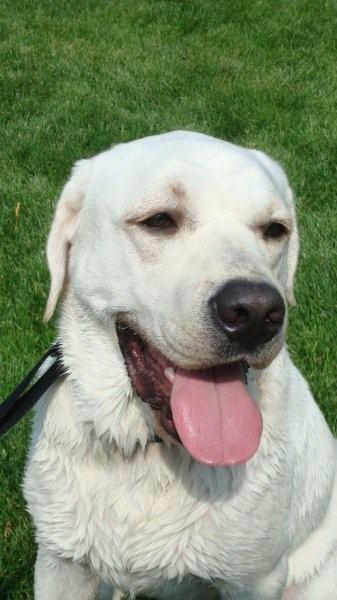 Nubble is once again at the start of a journey. For nineteen months, he has worked hard to learn the skills and behaviors of a service dog. He has matured into a fun, loving dog who loves to work and please others.
But Nubble has decided to take a new path. Instead of becoming a service dog, Nubble is going to find his forever home as a beloved pet.
 Not all of the dogs who begin our service dog program graduate as working service dogs. Some dogs have personalities and traits that better suit them for other careers as police dogs or explosive detection dogs. Other dogs make people very happy as family pets.
Nubble met with the state police to see if he would be a good fit for their program. After going through their evaluation, we learned that Nubble would be happiest as a family pet.
Whenever a dog is released from our program, we always find a loving home for him. Donna and her family are unable to adopt Nubble, and we are currently going through the adoption process. We will make sure that Nubble's new home is a good match for both him and the family so that everyone will be happy.
"This will be very difficult for me," says Donna. "It seems that him being someone else's family pet is a let down for me. But I keep telling myself what another puppy raiser said to me: 'I wanted my son to be a lawyer, but he is an artist. It may not be what I had planned for him, but he is good at it and he likes what he does.' "
Sometime after Nubble joins his new home, Donna plans to continue being a puppy raiser for us. We're very happy that she has decided to raise another puppy. "I love being a part of SSD," says Donna. "I have learned so much from Nubble that I think the best thing to do would be to take that knowledge and continue to learn and grow as a puppy raiser. But, boy, will I miss him."
While we search for a good match for Nubble, he continues to live with Donna and her family, and she continues to work with him on his skills. After all, he does love to work and learn new things. They've been practicing walking on strange surfaces like grates, trash bags and a rough board. They went to the grocery store, and when Donna saw a Golden Retriever nearby, she gave Nubble a cue to keep him busy, and he stayed focused on her. He knew there was a dog nearby, but he used his self control and ignored the other dog.
Nubble even met the new puppy, SSD Lewey, and did very well. He barked for a while until Donna moved him into another room to calm down, but then he was able to greet Lewey. Lewey was a big help for this first meeting because he stayed focused on his own puppy raiser, and Nubble ended up ignoring him.
 Over Memorial Day, the Northeast Puppy Raisers had a picnic at one of the puppy raiser's houses. Nubble had a great time playing with SSD Ben, Slate, Cassie and Lewey, as well as two family dogs. He also got to meet two Shelties that were visiting for a few hours. Nubble did very well with all of the dogs. The puppy raisers organized some dogs games, including a version of musical chairs where the people couldn't sit until the dogs did. The dogs also got to bob for biscuits. (Little Lewey bobbed for Cheerios instead of biscuits.) Slate won bobbing for biscuits and Nubble came in second. Nubble even tried to go swimming in the dog pool! The water was only eight inches deep, but Nubble lay down and moved his paws! He's quite a character.
"Nubble is a fantastic dog," says Donna. "He makes me smile every day. I'm glad he will make someone else smile, too."


Subscribe to:
Posts (Atom)

 Posts
Posts

