




As you know, we have a breeding program here at Susquehanna
Service Dogs. (Please see Why Do We Breed Service Dogs.) Our goal is to create
successful service dogs, so we put a lot of consideration into selecting the
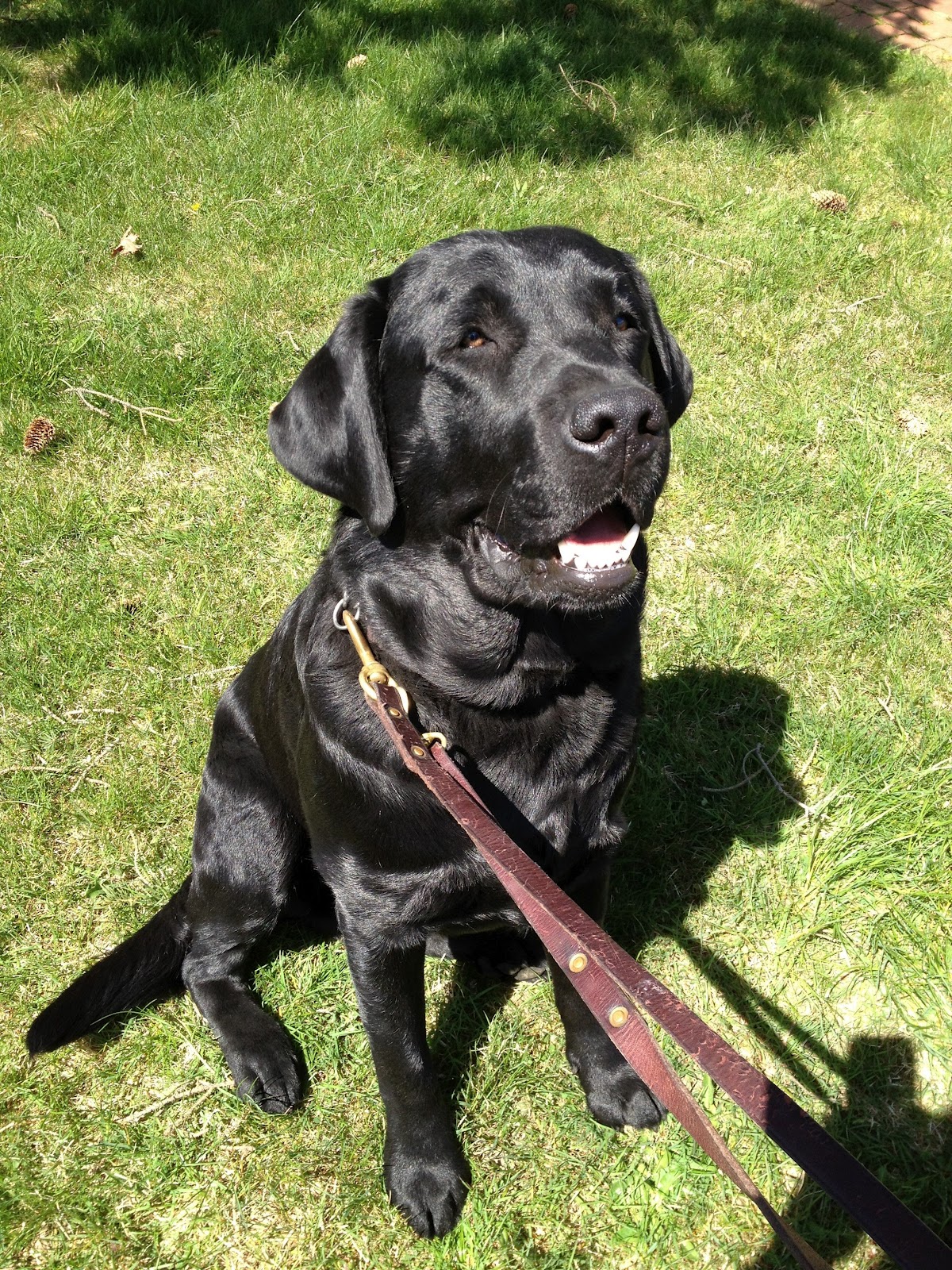
dogs that enter our breeding program. Let’s follow the journey of SSD General
George Meade to see what requirements the dogs need to meet before they can
become breeders.
Each of our litters are carefully planned, and we always
hope to produce a female or a very exceptional male so that we can continue to improve
the genetic line and create more high quality service dogs. Some litters have
special parents, and Meade was from such a litter, the Civil War Litter. His
father was our founding stud dog, SSD Sweet William. Will had some great
qualities that we wanted to bring back into our lines. Will was also a great
balance dog, which is a type of service dog that is in great demand.

Throughout the first nine months of his life, Meade attended
puppy classes with the other dogs in the program and went through several
formal evaluations. Each month, his puppy raisers completed a report on his
successes and challenges, as well as his raisers’ training ability. On the one
hand, he had some small issues, but on the other, he had an experienced puppy
raiser to work with him.
At six months, Meade’s puppy raiser completed the C-BARQ,
the Canine Behavioral Assessment and Research Questionnaire. The C-BARQ provides
standardized evaluations of the dog’s temperament and behavior. Each question
describes the ways a dog would typically respond to every day events and
situations. The dog can then be compared to other dogs in the database. The
C-BARQ gives the SSD staff more information about the dog, allowing us to make
better decisions about each dog’s future in the program.
When Meade was between 9 and 11 months old, his hips and
elbows were x-rayed. All of our dogs must meet certain hip and elbow
requirements in order to remain in our program. We do a preliminary OFA (OrthopedicFoundation for Animals) test for hips and elbows. We also use PennHIP
to evaluate hips. In order to become a breeding dog for SSD, the dog must receive
a good or excellent on the OFA hips test and have normal elbows. The results of
the PennHIP evaluation must show that the dog is in the top 50% of the breed.
SSD Meade had no elbow dysplasia, OFA excellent hips, and
was in the top 70% according to PennHIP.

We usually wait until the dogs are at least 12 months old
before neutering them. This can correspond with the 12-month evaluation that we
do for all of our dogs. Meade went to the kennel overnight with his siblings
and other dogs close to his age. There, he went through an even more intensive
evaluation, similar to C.A.R.A.T., as well as some special SSD evaluations. He
also had to meet and train around the kennel cats. The 12-month evaluation can
determine the future of the dog, but we always consider their entire history,
the history of his siblings, and more. After his 12-month evaluation, we began
to seriously consider Meade for our breeding program.
From the 12-month evaluation until he entered advanced
training, Meade continued attending puppy classes and public outings with his
puppy raiser. Each month, his puppy raiser submitted her monthly report,
including both the good and bad behaviors. When Meade was 12 months old, his
puppy raiser completed another C-BARQ. Things still looked good.
Meade went for his second visit to the veterinarian
ophthalmologist for another eye exam. Again, it came back normal, with a clear
CERF. All of the dogs in our breeding program and the ones we are considering
have an annual eye exam.

When he was between 16 and 18 months old, Meade entered
advanced training at the kennel. Advanced training is where the dogs learn the
advanced skills they’ll use a working service dogs. During this time, we look
at how the dog handles the stress of the kennel, works with a variety of
people, rides in the Sprinter van, and handles being around other, often
stressed, dogs. We want a dog that can quietly handle this life. A potential
breeding dog must spend a minimum of two weeks at the kennel, but it can be a
month or longer, depending on kennel space, training staff time, and
scheduling.
While he was in advanced training, Meade got to participate
in the “Meet the Dogs” process, where people have the opportunity to meet
several dogs, one of which could become their future service dog. We often have
our potential breeding dogs go to “Meet the Dogs” to see how they react.
Meade made it that far. Although he isn’t perfect, he’s
still being considered as a breeding dog. The next step is for Meade to have
genetic tests and a heart screening performed. Some of this information is
readily available. Based on his parentage, he is clear for progressive retinal
atrophy (PRA). With PRA, a dog can be normal, a carrier, or affected. Meade is
normal. We want our studs to be normal rather than carriers because then the
dog has more breeding options. (i.e. A carrier cannot be bred to another
carrier, but a normal dog could.)
Meade was also tested for retinal dysplasia and
oculoskeletal dysplasia and exercise induced collapse, and he is normal for
both. He then had an echocardiogram performed by the veterinarians at Palmyra Animal Clinic. The results were sent out to be read, and Meade was again
declared normal.
We also look at any other physical issues the dog may have
had throughout his life. Meade has had no other physical problems, such as
allergies, ear infections, broken bones, torn ligaments, seizures, or other
problems.
The next thing to do was find a good match for Meade. Once a
bitch (female breeding dog) was found, Meade had to be tested yet again, this
time for brucellosis, an infectious disease that would cause the dog to be
eliminated from the breeding program. Meade’s test came back negative, and when
the bitch was ready, they were successfully bred.
Then the entire process starts all over, only this time we
look at his litter. Meade now has a history based on the successes and problems
with his litters.
At any point, if a stud exhibits any significant issues or
even lots of small ones, he can be neutered.
Each of our studs and bitches live at home with volunteers,
called breeder caretakers. These volunteers may be the dog’s puppy raisers or
someone else who stepped in. We encourage all of our breeder caretakers to
continue training their dog as a demo/therapy/interview dog. These dogs give
demonstrations to various groups about what service dogs can do, accompany
staff and volunteers to interview potential partners, and visit hospitals and
other clinics. Meade has been training to become a demo/therapy/interview dog,
and has some experience in this area, which makes his handler proud. He is a
loving, joyful, and exuberant dog who enriches the lives of his raisers and the
many people he meets.





 Posts
Posts

