Showing posts with label early socialization. Show all posts

Wednesday, April 9, 2014

SSD Hopper Is in the Dog House

SSD Hopper
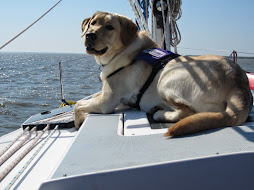
SSD Hopper is in the Dog House. No, she’s not in trouble. This sweet little puppy is being raised by students in Dickinson College Dog House (DDH), a student organization that raises service dog puppies. They’ve raised several dogs with the Northstar Foundation. We’re so excited that they’re raising Hopper for us! Check out Dickinson College Dog House’s Facebook page to see what Hopper has been up to lately.
                                                    
Last night was Hopper’s first Early Socialization Class (ESC), where she joined SSD Tadpole. Older puppies SSD Twister, SSD Breeze, and SSD Doppler also joined in so the women of DDH could each get some experience working with a puppy.

After some puppy massage, we worked on attention—clicking and treating the puppies for making eye contact.

SSD Hopper

SSD Twister

SSD Breeze

SSD Doppler


One of the first cues a puppy learns, besides their name, is "sit." Puppies sit all the time, so it's usually easy to capture the behavior. We started clicking and treating the puppies for sitting. Eventually, we will add the verbal cue "sit" and then a hand signal.

Next we worked on shaping the puppies to touch their nose to a cone. Shaping is a training method that lets us teach the dogs complex behaviors. In shaping, each behavior is broken down into tiny steps. As the dog masters each step, we increase our criteria. For example, when we shaped the pups to touch their nose to the cone, we started by just clicking and treating them for looking at the cone. Next for taking a step toward it. Then two steps, etc., until they were touching their nose to the cone.

Watch Tadpole touch his nose to the cone. Toward the end, his puppy raiser patiently waits for him to go back to the cone. He did eventually look at the cone after we stopped taking video.


We can’t wait to see what Hopper and Tadpole will have learned by next week!

SSD Tadpole

Wednesday, December 19, 2012

Early Socialization Class

All of our puppies are now with their puppy raisers, which means it's time to start learning how to be service dogs! For the first 9 weeks with their puppy raisers, our puppies attend early socialization classes with the other dogs in their litter. During these classes, we introduce and practice new some basic skills that the dogs should know, such as "sit," "down," and loose leash walking. These classes lay a solid skill foundation for the puppies before they move into regular puppy classes with the rest of our dogs in training. And as the name suggests, they also give the dogs a chance to be socialized.

In Tuesday's early socialization class, the Water puppies practiced "sit," and then started working on "down." To teach "down," we start the dogs in a sit, then with a food lure, move our hand from the dog's nose to the floor. As soon as the dog is lying on the ground, we click and give the dog the treat. We'll use a lure up to three times, and then we'll just use our hand, still clicking and treating when the dog is lying down. At this stage, it's important not to use the word "down." The verbal cue will be added later, once the dog is reliably lying down. Soon, the Water pups were doing beautiful "downs!"


We also practiced loose leash walking, which is one of our most important service dog skills. It's one of the hardest skills for a dog to learn because it involves so much self control. It's also a skill that needs to be taught from day one so the dogs learn never to pull. The Water puppies are off to a great start!

Watch SSD Rain practice loose leash walking. Although the carpet has lots of distracting smells, Rain's puppy raiser gets her attention and then clicks and treats when the leash is nice and loose while Rain is walking next to her. When Rain pulls to the end of the leash, her puppy raiser backs up and gently pulls Rain back. See how Rain follows, and is soon trotting along again on a loose leash? (Also, check out how Rain's puppy raiser delivers treats right to Rain's mouth at the puppy's level. This keeps Rain from adding a little hop to get her treats.)


We also continued working on the cue "go to bed," where the dog goes to a mat or dog bed and lays down. This cue can be used as a great anchor for the dog, and it has many uses. It can be used to give the dog a place to be while their handler is preparing food in the kitchen, or it can be used as an anchor when guests visit, among other things.

To teach this cue, we put a towel or blanket on the floor and start by clicking and treating the dog just for looking at the blanket. Once the dog has that down, we wait to click until the dog takes a step toward the blanket, then two steps, then three, until the dog has all four paws on the blanket. We keep increasing the criteria until the dog goes to the blanket, lays down, and stays there. Once the dog has that behavior, then we'll add the verbal cue "go to bed."

Watch SSD Cove practice "go to bed." She walks right over to the towel and puts all four paws on it. Notice how her puppy raiser delivers treats so Cove has to step off of the towel. This sets it up nicely so that Cove has to keep moving and walk back to the towel for another click and treat.


We're looking forward to seeing what these puppies learn by next week!

Friday, April 29, 2011

Puppy Class for the Civil War and Games Pups

It seems like only yesterday that the Civil War and Games puppies were playing on the puppy cam. These puppies are now in the their last month of early socialization classes, and then they'll be able to join the rest of the dogs in training in our regular puppy classes.

Early socialization classes help the puppies get used to being around other dogs and performing behaviors in that environment. When these dogs grow up and become service dogs, they will need to be able to perform behaviors regardless of where they are. Early socialization lays the foundation and helps the dogs become very adaptable to change in their environment.

At the beginning of class, we had all of our puppy raisers take their dogs off leash so we could practice recalls. As soon as the puppies were off leash, they started romping around together, happy to have some playtime. Many of the puppies still came to their raisers when called. Our puppy raisers practice recalls as often as they can. A good recall can save a dog's life. Watch SSD Chamberlain bound back to his puppy raiser in the midst of playing with his littermates.


The puppies then practiced basic obedience. Each puppy does "sit" and "down" on cue, some on both the verbal and hand signal. Watch SSD Atari sit and give a down on cue.


SSD Harriet focuses on her puppy raiser and sits when asked. From a sit, she easily slides in to a down on cue.


When the puppies go out in public, they always draw quite a crowd of people wanting to pet them. Usually when people pet a dog, the dog will give that person it's attention. You've probably seen a dog wagging its tail and getting very excited when someone pets it. However, a service dog needs to stay focused on its handler, even when someone else is petting it. We start practicing greetings right from the start. When someone asks to pet a puppy in training, the puppy raiser makes sure their puppy is standing calmly with all four paws on the floor or is in a sit or down. Then while the person is petting the puppy, the puppy raiser gives the dog treats to keep them focused. If the puppy gets too excited, the puppy raiser may ask people to stop petting the puppy until they get them back under control.

Watch SSD Rummy stay focused on her puppy raiser while she's being petted.


In the next video, SSD Clara practices greetings. Note that as soon as she gets up and starts to pay attention to the person who's petting her, the person stops and Clara's puppy raiser works to get her attention again. Once Clara is sitting and focused again, she can be petted.


The last thing we worked on in class is the cue "go to bed." When given the cue, the dog should go to their dog bed or mat and lay down. This cue comes in handy when you're preparing food in the kitchen or when you're eating meals. Instead of being underfoot or begging for food, the dog should stay in a nice down-stay on their bed. Watch SSD Meade learn "go to bed." His puppy raiser is shaping the behavior, starting with tiny steps. Note how as soon as Meade puts his paw on the mat, he gets a click and treat. Eventually, he will only get a click and treat for having two paws on the mat, then three, then all four, then laying down and staying.


The Civil War and Games puppies are doing very well in their training, and we're looking forward to having them join our regular puppy classes at the end of May.

Don't forget about the Highmark Walk for a Healthy Community on May 14! Some of these puppies may be there, and if you sign up and raise money for the Walk, you may get to help some of these puppies practice their greetings!

Sign up for the Highmark Walk for a Healthy Community.

Friday, October 15, 2010

Gemstones and Flowers Soak Up New Skills


Young puppies are sponges when it comes to learning new things, and the Gemstones and Flowers are no different. Aqua, Opal and Topaz (the Gemstones) and Daisy and Dandelion (the Flowers) attended Early Socialization Class at the kennel on Wednesday.

Because it was a gorgeous evening, we let all of the puppies run in the field, which is an enclosed, woodsy area. The pups had a great time playing!


Of course, we turned their time in the field into a training opportunity, and we practiced recalls. Each puppy raiser went to a different part of the field while the dogs were running around and then called their dog to come. They did great! In the following video, Opal is in the process of begging for treats from Topaz's puppy raiser. But when her puppy raiser calls her, she bounds straight over to him.


It was starting to get dark, so we moved class from the field to the training room. And of course, we turned the relocation into another training opportunity. One at a time, each puppy and puppy raiser practiced loose leash walking from the field to the training room. Daisy demonstrates loose leash walking in the next video. The leash is nice and loose, forming a "J," and Daisy is focused on her puppy raiser.


Topaz's puppy raiser does a nice job getting Topaz refocused for loose leash walking. when he starts to pull, she backs up so Topaz can't reach what he wanted. She then turns in a circle to get him reset, and they continue on their way. Look at how nicely Topaz walks on a loose leash after that!


Once everyone was inside, we went over all of the cues in the puppy manual. When puppy raisers first get their puppies, we give them a bag full of goodies for the dog (tug toy, ear wash, heartworm and flea and tick meds, leash, etc). We also give them a puppy manual that contains information about dog health, clicker training, shaping, socialization and more. In the back is a list of all of the cues the puppy raisers will be teaching their puppies.

Now, we did not go through the list of cues because each puppy needs to know them by the next class. We went through the cues so that our puppy raisers were aware of what they are. It's important to use a verbal or hand cue only once the puppy has learned a behavior. Otherwise, the word is just going to be meaningless to the puppy. Or the puppy might start to learn that the cue means something completely different than what you intend it to mean. For example, if you see your puppy starting to lunge for some food on the floor, your instinct might be to say the cue "leave it" as you pull the puppy away from the food. When you say "leave it," you mean "ignore that food on the floor and look at me." But if the puppy doesn't know that behavior and he always hears the "leave it" cue as he's pulling towards food, he could interpret "leave it" to mean "pull really hard to try to get that tasty food on the floor." So it's important not only to wait until the puppy knows the full behavior before adding the cue, but also to be aware of what the cues are so you don't inadvertently start using one before the puppy is ready.

We spent some time practicing "leave it." To start, each puppy raiser held some kibble in a closed hand. Of course, the puppies wanted to get the kibble, so they nosed at the hand. The second their puppies stopped trying to get the food and looked away, the puppy raisers clicked and treated with food from their treat pouches. It didn't take long for the puppies to learn that they'll get treats for ignoring the food in the hand. Watch Aqua quickly give up on trying to get the food out of her puppy raiser's hand.


By the end of one training session, some of the puppy raisers were able to leave food in an open palm and the puppy would ignore it. Watch Dandelion . She ignores a whole pile of food in her puppy raiser's open palm. Notice that when she does turn her head toward the food, her puppy raiser immediately moves his hand out of her reach. Soon she is staring intently at her puppy raiser, ignoring the food next to her head.


This was an excellent early socialization class! We can't wait to see what these puppies will learn by next week!

Friday, August 27, 2010

Whatever Happened to the Rock and Roll Stars Puppies?


Where are the Rock and Roll Stars puppies now?

Jagger, Hendrix, Dylan, Grace and Zappa are almost 14 weeks old, and they're happily learning everything they can about the world with their puppy raisers.

On Wednesday, they had their last early socialization puppy class. When puppies first join their puppy raisers, they attend early socialization classes with their littermates. These classes are as much for the puppy raisers as they are for the dogs. Puppy raisers have the opportunity to ask questions and learn tips and tricks for training the dogs.

In this last class, we practiced loose leash walking, where the dog walks calmly next to its handler without pulling. The leash must be nice and loose. Loose leash walking involves a lot of self control, which is one of the most important things a puppy raiser can teach the dogs-in-training.

Why is self control so important? Imagine a balance dog assisting his partner to walk through a parking lot. The partner is holding on to the leash and the balance harness that the dog is wearing. Suddenly, the dog smells something wonderful in the grass three feet away. He dashes over and plasters his nose to the spot. His partner is yanked sideways and falls to the pavement. At the very least, she is bruised and may have difficulty getting back up, especially because she now needs to convince her dog to abandon the interesting smell and return to her side. She could also have a broken bone, or worse.

A dog with self control would have ignored the wonderful smell in the grass. He would continue to walk calmly beside his partner, assisting her safely across the parking lot.

Self control extends to more areas than just loose leash walking. Dogs must have self control around food, at doors (waiting calmly and not dashing through), around other people and animals, etc. In this last early socialization class, however, we focused on just loose leash walking.

First, we had each puppy demonstrate loose leash walking with their puppy raiser. The pups all did very well!

In this video, SSD Grace walks next to her puppy raiser on a nice, loose leash. Notice how she focuses on her puppy raiser. At one point, she turns and looks at one of her littermates, but instead of lunging toward him, she demonstrates wonderful self control and looks back at her puppy raiser.


Here, SSD Jagger walks on a loose leash. Look at that attention! He doesn't take his eyes off his puppy raiser.


While one puppy was demonstrating loose leash walking, the other puppies had the opportunity to practice down-stays, meaning they relax in a down. SSD Dylan gives a nice down-stay while he waits his turn to demonstrate his loose leash walking skills. To keep him focused and to reward him for such good attention, his puppy raiser gives him treats.


After each puppy demonstrated loose lease walking, we had the puppy raisers exchange puppies. Now the puppies had to do loose leash walking with an unfamiliar person! The reason we had them swap puppies is because the pups will eventually have someone else training them. When they go to advanced training, they'll have a new trainer, and eventually, they'll be paired with a partner when they become service dogs - all different handlers who will have slightly different ways of asking the puppies to do the same thing. The puppies need to be able to adapt to different handlers.

The Rock and Roll puppies did a great job! In this video, SSD Zappa walks nicely on a loose leash. His attention is on his handler, even though she's not his usual puppy raiser. Notice how Zappa gets a little excited near the end of their loop around the room and jumps on his handler. She does a great job resetting him. She simple backs up until Zappa is back in position for loose leash walking, and then they move forward again. After they've taken a few steps, she clicks and treats. We call this the "penalty yards" method of training loose leash walking. As soon as the dog starts to pull, or in this case, jump, the handler backs up until the dog returns to its place at the handler's side. Once they've taken a few forward steps on a loose leash, the dogs gets clicked and treated.


SSD Hendrix settles right in with his new handler. He walks on a loose leash right past his brothers and sister and completely ignores them.


The next time the puppies come to puppy class, they'll be joining the rest of the dogs in training. We're sure that both puppies and their puppy raisers will be well prepared to join the regular classes. Send them some good wishes in the comments!


Tuesday, August 24, 2010

The Gemstones Puppies Go Shopping!

Aqua, Amber, Coral, Diamond, Topaz, Taz and Opal didn't really go shopping. But they did go to the mall!

Today the puppies went on one of their first public outings to the Colonial Park Mall. Our trainers, the puppies' breeder caretakers and several of our wonderful volunteers each took a puppy and walked around the mall. Even though the puppies are only seven weeks old, it's important for them to have early socialization with new people and to visit many new environments. Sometimes new people and environments can be very scary for dogs, so we make sure that the puppies have plenty of new experiences so they learn to adapt quickly and easily. Once they become service dogs, they'll find themselves accompanying their partner to all sorts of different places, and they need to be able to continue to assist their partner no matter what situation they're in.

The Gemstones puppies seemed to have a blast in the mall. The puppies probably greeted every person who was in the mall today - great experience for the pups! Normally, you shouldn't just stop and pet a working service dog or service dog-in-training, especially without asking first. However, for this particular outing, we wanted people to pet the puppies. We invited everyone to stop and pet them.

In addition to greeting people, the puppies encountered stairs, ramps, and loud noises. In this video, SSD Amber (red collar) walks up the steps.


SSD Taz and his handler found a photo booth at the mall, and Taz had no trouble walking through it to reach his handler on the other side.


SSD Diamond checks out the kid cars.


SSD Aqua walks on a loose leash.


SSD Opal has a great time exploring the mall. Check out her smile!


SSD Topaz takes a quick look around.


After taking care of an itchy spot, SSD Coral heads over to greet more people.