Showing posts with label advanced training. Show all posts

Monday, February 27, 2017

Twelve New Dogs Start Advanced Training


Twelve new dogs start their first semester of advanced training today! They’re joining seven dogs who are already in advanced training.

Last night raisers gathered at our kennel to officially turn in their dogs for this next step in their training. The dogs will now live at the kennel from Monday through Friday, going home to their raisers on weekends and holidays.


Each dog was fitted for their new collar. Every dog in advanced training has their own unique collar, which helps us, raisers, and sitters tell the dogs apart. Dogs from the same litter are often in the kennel at the same time, and they can look a lot alike!

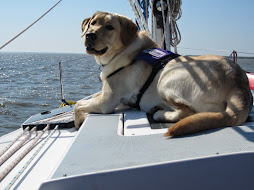
Each dog also was fitted in their new green advanced training harness. During the dogs’ first 18 months, when they’re with their raisers, they wear the purple puppy-in-training harness. Green marks the next step in their journey.


The most exciting part for the dogs was meeting their new roommate. Often roommates are siblings, and they have fun romping and playing together in their kennel run and outside, just like they did when they were tiny puppies.

Play is an important part of our dogs’ day. Kennel life can be stressful for dogs. Not only is it a new environment, but it’s completely different than their home with their raisers. We make sure the dogs get to play in the field several times a day, and we put bones and chew toys in their kennel runs. We also have Walk and Cuddle volunteers, who do exactly that with the dogs. They take the dogs for fun, relaxing dog walks, play with them in the field, and cuddle with them in a separate, comfy area. Our Walk and Cuddle volunteers have been known to just bring a book and snuggle with the dogs while they read. Playtime and the Walk and Cuddle program help to reduce kennel stress.

Although life at the kennel can be stressful for the dogs, it’s an important step in their service dog training. It gives us a chance to see how the dogs handle living in a new environment. When they become working service dogs, they’ll go to live with their new partner in a new environment with a completely different routine. We need to have confidence that our dogs will be able to handle that change. It wouldn’t be fair to either the dog or the partner if the dog became too stressed because of the environmental changes. So living at the kennel is an important part of the dogs’ training, but we do everything we can to make it fun and enjoyable.

What will the dogs do in advanced training? The first few weeks are devoted to reviewing and polishing all 26 cues the dogs learned with their raisers. The dogs will also retake their 12-month evaluation, which lets us see if anything has changed in the past six months.

As we get to know each dog, we start to get a feel for the type of work they might do best. We put them in a balance harness to see if they mind it. Balance harnesses have a hard handle for a person to hold, and the dog must be completely comfortable with this new equipment. We also test the dogs for hearing work. Not only does the dog need to recognize sounds, but they have to want to respond to those sounds. We see if the dog is interested is psychiatric service dog work or if they like to work next to a wheelchair. Our goal is to discover which type of work the dog likes best. We want all of our dogs to enjoy their service dog work.

On Tuesdays and Thursdays, our new advanced training dogs will go out in public to places like Giant Food Stores, the mall, or Target. There, they’ll work with our public training volunteers, which will give us a chance to see how well the dogs work with different handlers.

This is an exciting time in these dogs’ lives! Raisers can expect sleepy dogs when they pick them up this weekend. Thank you to all of the raisers who dropped their puppies-in-training off at the kennel last night! 

Thursday, April 16, 2015

Public Volunteers and our Advanced Training Dogs


Every Tuesday and Thursday, the dogs in advanced training hop into the SSD van, and we head out to visit public places like Giant, Target, the Harrisburg Mall, the Colonial Park Mall, or like today, Messiah College for the Special Olympics.

Working in public is an important part of a service dog’s training, because once they become a working service dog, that’s exactly what they’re going to be doing. Working in public. And that means they need to be comfortable working in any environment and situation, wherever life with their new partner takes them.

We have 16 dogs in advanced training right now, and in order to take them out in public, we rely on a group of volunteers to work with the dogs on these public outings. Our public volunteers are amazing! Each Tuesday and Thursday, they meet us at the designated location, and we hand them a dog to work with for two hours.

Carol Fricke enjoys working with different dogs each time she volunteers. “Each dog has their own personality, and it’s neat to see,” she said. Carol started volunteering with our advanced training dogs in public four years ago. When she retired from teaching, she decided that since she loves animals, she’d look for volunteer opportunities with dogs. A news article about SSD convinced her that this was the opportunity she was looking for.

Plus, “I can work with the dogs and not want to take them home with me, because they’re going to be doing such a great service,” she said.


Mel Brownold has also been volunteering with our advanced training dogs for four years. “When I retired, I was looking for a place to do some good,” he said, “and I felt more comfortable with animals than with people.”

He enjoys working with the dogs and seeing people interact with the dogs. “You do a lot of listening when you’re working with a dog,” he said. “You hear stories from people about their own dogs. It’s always interesting.”

Some of our public volunteers also volunteer in other areas of SSD. Mel has helped with team training and occasionally with Meet the Dogs, where people on our waiting list get to meet and hopefully make a match with one of our dogs in advanced training.


Darlene Furlong has worn just about every hat there is at SSD. She’s been volunteering with SSD for 11 years, and in addition to training the dogs in public, she helps with puppy raiser interviews and preliminary interviews for people applying for a service dog. She has done service dog demonstrations and is a puppy sitter. Like Mel, she has helped with Meet the Dogs. She served as a puppy coordinator for a little while and has given private lessons to puppy raisers and demo teams. She and her husband have transported dogs to and from other service dog programs in many different states, and in her travels, she helps recertify our working service dog teams all along the East Coast.

“I love working with the dogs,” she says, “and helping to train them to do their jobs for their future partners.”

Thank you to all of our public volunteers for working with our dogs in advanced training and helping them perfect their skills!


Tuesday, April 14, 2015

“How could I not raise a service dog?”


Guest post by Meghan Miller. She and her husband have raised SSD London and are currently raising SSD Garnet and SSD Slider.

How? 

It's the number one question I am asked as a puppy raiser for SSD. How long do you raise them? How much do they pay you? How can I get involved? And both my most frequently asked and the most heart wrenching: How can you give them up? 

Before our first dog was placed, all I could say was, "I don't know but it will be worth it."  Now that we have said our goodbyes and our boy has started the life he was meant for, my first thought is “Don’t cry.” And I usually say, “It’s not easy, but it’s worth it.”  The truth of the matter is that it is extremely hard to give up your dog. You try to tell yourself they never belonged to you, but after 18 months of training and cuddles and puppy kisses, they certainly feel like your dog. 

The question I am always waiting for, but rarely asked, is why?  Some raisers do this as a way to teach their child about volunteerism, or because they want to make a change in someone's life, or because they love dogs, or because they love the mission of SSD. Our reasons were originally far more selfish:  I found myself on an impossible phone call one day while living in Portland, Oregon. Three thousand miles away, my best friend had received potentially terrifying news from her doctors. "They are talking about the big C," she whispered—cancer. We couldn't even say the word. It was one of those moments where the world came to a screeching yet silent halt, the kind you find yourself gripping the counter so you don't go flying off. A moment you know will affect you in a profound way, but one you have no control over.

I'm the type of person who likes to have control over the every possible detail, so I found myself bargaining with God, Buddha, the universe, anyone and everyone who would listen. I was doing dozens of good deeds each day, from holding doors for the person who's about 30 feet out of appropriate door holding range, to moving slugs into shadier spots on the side walk, to giving out money and granola bars to homeless people. I seized every opportunity, reaping almost instant reward - no one had better luck than me. But what I was hoping for was some karma to be sent back east to my best friend.

When my husband and I moved back to PA, we started raising for SSD, hoping that fundamentally changing the life of a person in need would provide the necessary cosmic debt to reverse my friend’s ill-boding omens. I was handed a chubby ball of fluff, a licking machine named SSD London. I could outline how much and why I love SSD London in great detail, but this story isn't about falling in love – it’s about finding incredible satisfaction among equally incredible heartbreak. When I dropped him off at the kennel on the final night before Team Training, I cried the whole way there and sobbed the whole way back. I had prepared myself for the pain that would come with being raiser, even cautioning myself that it would be worse than I imagined. And it was. So. Much. Worse.


But a funny thing happened over the next two weeks as I watched my dog fall in love with his new partner. Just hearing the stories about them absolutely wasn't enough. I still thought, "It's impossible for someone to love him more than I do."  But the moment I saw her, the newest love of London's life, sleeping on “my” dog, was the moment I truly understood he was never my dog.

We were lucky enough to share a meal with London’s forever family and hear all their hopes and concerns about bringing a new dog into their life, one for which they had been waiting for over four years. At the end of the night I kissed my boy goodbye and wished them well, and once again sobbed the whole way home. 

Since then we've kept in touch. I have been able to watch London give his partner a whole new life - new freedoms, new responsibilities, and new dreams.  I have watched other teams stop seizures, help with walking, and open doors both literally and figuratively. Every interaction between dog and partner has been worth the tears I shed when I said goodbye. When I am at my wit’s end or feeling discouraged, I cling to the knowledge that I have made a real and lasting positive impact on someone's life.


The night we learned that London would be starting Advanced Training was also the night I received a text message with a picture of my friend's clean bill of health. By that time we had started a new journey with a second dog. My friend was sure to thank us for raising them, citing our dogs as the reason for her good karma.

And so we give up "our" dogs.  We raise them for the friend I couldn't help and for the family we could. For the mission statement. For the community of raisers, sitters and huggers. For the opportunity to teach about giving. For a shorter waiting period for the next partner. For another dog in the house. For the opportunity to change a life.  So in the end, the answer to that constant “How” question is just another question.

How could I not?

Join Meghan and Susquehanna Service Dogs for the Highmark Walk for a Healthy Community on May 16. 

Event Details

When
Saturday, May 16
On-site registration starts at 7:45 a.m.
5K Walk begins at 9 a.m.
One-Mile Fun Walk begins at 9:15 a.m.

Where
Harrisburg Area Community College
1 HACC Drive
Harrisburg, PA 17110

Registration

Thursday, April 9, 2015

Our Advanced Training Dogs Go Orange 4 Owen


Our dogs in advanced training were sporting orange bandannas today while they worked on their service dog skills at Giant.

The orange was part of CBS21’s Orange Out today to support Owen’s Foundation, which raises awareness about the consequences of distracted driving. The foundation was started after 8-year-old Owen Brezitski was killed by a distracted driver as he was crossing the road with his family.

Two of our dogs in advanced training—SSD Oboe and SSD Olympia—are part of Owen’s Litter, the puppies named by Owen’s family. Oboe and Olympia both wore the orange bandanna as they trotted through Giant.

Every Tuesday and Thursday, our dogs in advanced training leave the kennel to practice their skills in public at places like Giant, the Colonial Park Mall, the Harrisburg Mall, and Target. We have a great group of volunteers who work with the dogs in public. (Check back next week during National Volunteer Week for a blog post about our public volunteers!)

Today, we went to Giant on Linglestown Road, and the dogs spent two hours walking around. Check out these photos of the dogs at work.

SSD Olympia practices "under" beneath a table of baked goods. 

SSD Hank keeps his attention on his handler. Just before this, he was working on the cue "lap," where he rests his front legs in his handler's lap.

SSD Cove rests while her handler looks at produce. 

SSD Beaker (front) and SSD Cove relax in down-stays while their handlers shop.

SSD Brickle practices working beside a shopping cart.

SSD Oboe sits in the food court/lounge area and ignores the activity around him.

SSD Nola also practices working beside a shopping cart. 

SSD Mali stays under the table. 

SSD Bridge chills out in his balance harness after practicing walking next to his handler. 

SSD Mint sits and ignores the food behind her.
Working in public is an important part of the dogs’ training. Once they’re placed with their person, they will accompany them almost everywhere. The dogs will need to be comfortable working in any environment so they can continue to assist their partners no matter what situation arises. 

Grocery stores can be especially challenging for dogs in training. In the produce aisle, there may be small pieces of vegetables or fruit on the floor that they have to ignore. They need to ignore the other shoppers, as well as the products on the shelves. No free sniffs! 

The dogs in advanced training did very well working at Giant! 

Thursday, June 6, 2013

Meet SSD Parks


Meet SSD Parks! She’s part of the American Heroes litter and named after Rosa Parks. Right now, she’s finishing up her first week of Team Training with her new partner!

For the past two years, she has lived with her puppy raiser family. Her puppy raiser Kali describes her as “smart, a workaholic, sassy, spunky, determined, playful, and lovable!” Parks loves to play with squeaky balls and any treat-dispensing toys. 


Although Parks loves all food, some of her favorite power treats are sweet potato puffs and goldfish. One of her all-time favorite foods is peanut butter!

Although she has been in advanced training since November, she still returned home to her puppy raisers on most weekends and holidays. Just because she was in advanced training didn’t mean her puppy raisers didn’t have to continue working with her. They working on extending the duration of several cues, such as “lap” (resting two legs in a person’s lap) and “visit” (resting her head on the person’s hand or lap), and worked on easy treat taking. Even though they still did some training, Parks got plenty of time to relax, play, and of course, catch some Zs.

Advanced training can be tiring for the dogs, no matter how well-adjusted they are to life at the kennel. “One day after picking Parks up from advanced training, we stopped at the store and left her in the car since she was so tired,” said Kali. “When we got back, she was in the passenger seat where I sit. I opened the door, and she would not budge. I pushed her and tried to pick her up. All she did was look up at me with those puppy dog eyes. Guess who rode in the back seat the whole way home?”

Recently, Parks and Kali walked in the Highmark Walk for a Healthy Community. Parks did fantastic! They also traveled to Washington, D.C., where Parks rode the Metro and got her picture taken with the newly unveiled statue of her namesake, Rosa Parks. 


If there’s one thing Kali would like Parks’ new partner to know, it’s that Parks will never give up. “She will work until you stop. She’s full of love and energy!”